20 October 2026
Why Desert Pullouts Are a Common Recoveries in Dubai
Presented by @desertpulloutcarrecoveryindex
Driving in Dubai often means covering long stretches of highway that cut through open desert. Most drivers think about fuel stops or rest breaks, but few consider what happens when a vehicle stops working in one of the most remote sections of road. The reality is that a breakdown in these areas, especially during summer, is not just an inconvenience. It can become a serious safety risk if you are not prepared. Over the years I have seen many drivers underestimate how quickly heat and isolation can turn a minor mechanical fault into an emergency. That is why understanding the process behind a desert pullout is useful for anyone who drives regularly in the UAE.
What a Desert Pullout Really Means
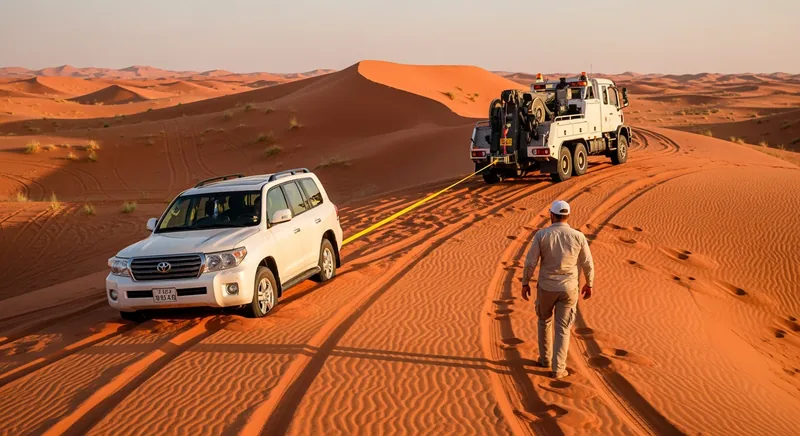
In the context of roadside recovery, a desert pullout refers to a situation where a vehicle has to be retrieved from a soft sand area or from the shoulder of a road that borders desert terrain. It is not always about being stuck in deep dunes. Sometimes the vehicle simply pulls over to the side because of a tyre blowout or overheating, and the ground is sandy enough that a standard tow truck cannot get close enough without getting stuck itself. The term has become common among recovery operators in the Gulf because it describes a specific type of job that requires extra gear, more time, and a different approach than a simple roadside fix.
I once helped a friend whose car had broken down near Al Qudra Lakes. The road there is paved but the shoulders are soft. By the time we arrived, his car had sunk a few inches into the sand, and a regular tow truck would not have risked coming off the asphalt. That experience taught me that a desert pullout is not just about towing a car. It is about the logistics of reaching the vehicle safely without creating a second recovery situation.

Why Desert Pullouts Happen More Often Than You Think
Dubai's road network includes many routes that pass through undeveloped desert. Even major highways like the Dubai-Al Ain Road or the E611 have long stretches where the nearest exit or service station is many kilometres away. Vehicles break down for the usual reasons: coolant leaks, battery failure, fuel exhaustion, or mechanical wear. When that happens on a road lined with sand, the driver pulls over and suddenly finds their vehicle partially embedded. The heat softens the ground surface, and the weight of the car does the rest.
Another common cause is driver error. Tourists or new residents sometimes take a wrong turn onto unpaved tracks or decide to stop for a photo. The sand here is deceptive. What looks like firm ground can be loose powder just below the surface. Once the wheels lose traction, getting back onto the road requires professional help. A desert pullout Car Recovery Dubai operator deals with these cases regularly, and they have the equipment to handle them without damaging the vehicle further.
What Makes a Desert Pullout Different from a Normal Tow
A standard tow on a paved road is straightforward. The truck backs up, hooks the car, and pulls it onto the flatbed. With a desert pullout, the recovery team must first assess the ground stability. If they drive a heavy truck onto soft sand, they risk burying it as well. That is why experienced operators use lighter vehicles or 4x4 recovery trucks that can move across sand without sinking. They also carry sand tracks, winches, and sometimes air bags to lift the vehicle gently before towing.
I have watched a team work on a sedan that had slid into a sandy ditch near Al Marmoom. They did not just hook a chain and yank. They dug around the wheels, placed traction mats, and used a winch anchored to a solid point on the road. The whole process took about 45 minutes, but it was done without any damage to the car's undercarriage. That is the level of care required for a proper desert pullout. Rushing or using too much force can tear off a bumper or damage the suspension.

When You Should Call for Help Instead of Trying to Drive Out
Many drivers, especially those with four-wheel-drive vehicles, think they can power their way out of soft sand. In some cases that works, but more often it makes things worse. Spinning the wheels digs the vehicle deeper, and if the underside gets high-centred on the sand, recovery becomes more complex. If you feel the car losing traction and not moving forward, stop immediately. Turn off the engine to avoid overheating, and call a recovery service. A desert pullout Car Recovery Dubai team can reach you faster if you do not move the vehicle further into trouble.
The same applies if you have a puncture or mechanical issue in a sandy area. Even if you can change a tyre on solid ground, doing it on soft sand is dangerous. The jack may sink, or the car could shift. It is better to wait for professionals who have the right gear and experience. Your safety and the condition of your vehicle are worth the wait.
What Good Recovery Looks Like
A well-handled desert pullout has a few clear signs. The operator arrives in a vehicle suited for the terrain, not a standard tow truck. They take time to inspect the situation before hooking anything. They communicate clearly about what they are going to do and how long it will take. And they work methodically, using equipment that protects the car's bodywork and undercarriage. You should never feel rushed or pressured to accept a recovery method that seems aggressive.
I have seen the difference between a rushed job and a careful one. The rushed job left scratches on the car's side and a bent tow point. The careful one cost a bit more time but left the car exactly as it was before the breakdown. For the vehicle owner, that peace of mind matters. A desert pullout Car Recovery Dubai service that follows proper procedures is worth choosing, because it reduces the chance of secondary damage and gets you back on the road sooner.
Practical Tips for Drivers
- Keep a recovery service number saved in your phone before you travel through desert roads. Trying to search for one while stranded in poor signal areas is stressful and slow.
- Carry a basic emergency kit including water, a phone charger, and a reflective vest. If you break down in a sandy area, stay inside the vehicle with the windows up until help arrives, especially at night.
- If you have to pull over onto a sandy shoulder, do not turn off the engine immediately if you can help it. Keep the air conditioning running while you call for help, but watch the temperature gauge.
- Never attempt to push a car out of soft sand alone. The heat can cause exhaustion or heatstroke very quickly, and you risk injuring yourself.
Final Thoughts on Desert Pullouts
Driving in Dubai comes with many privileges, but the desert environment is unforgiving when things go wrong. A breakdown in a remote area does not have to become a disaster if you know what to expect and who to call. The term desert pullout describes a specific type of recovery that requires skill, proper equipment, and local knowledge. Understanding that distinction helps you choose the right help when you need it. Car Recovery Dubai has built its reputation on handling these exact situations with professionalism and care, and that is the kind of service that makes a bad day a little easier to handle.